
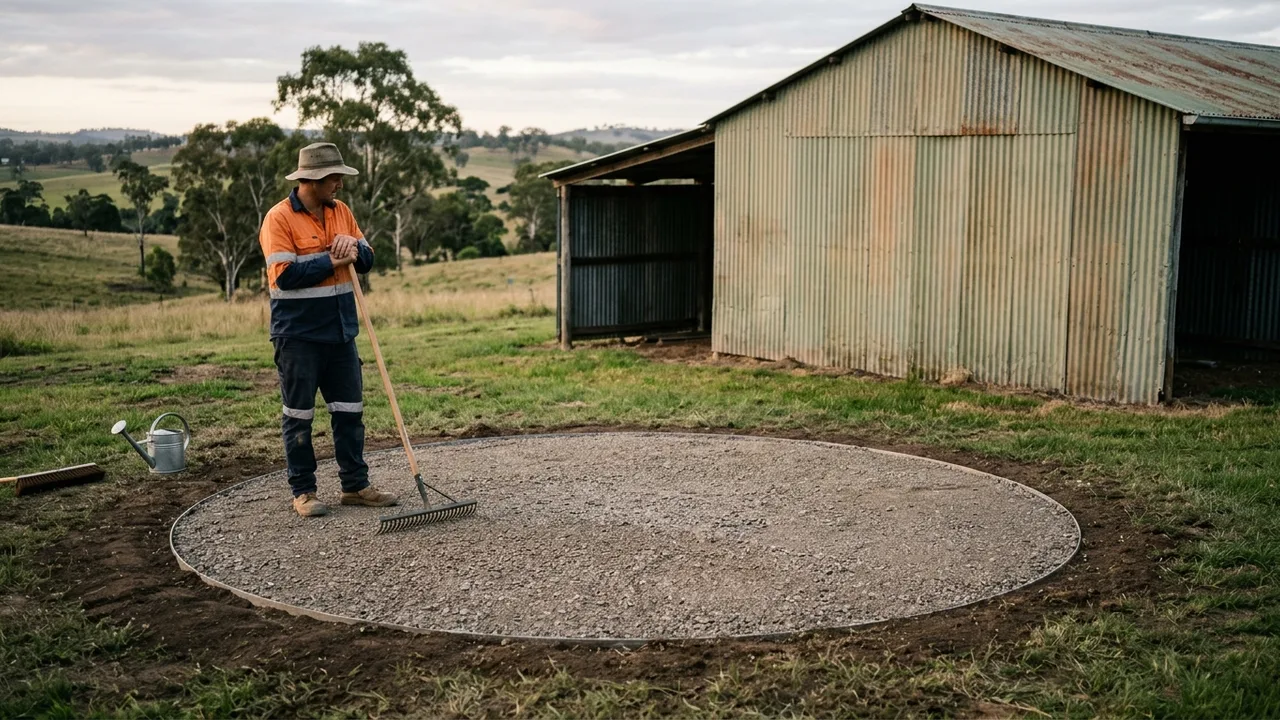
Shed Pad Preparation in the Darling Downs
Shed pad preparation in the Darling Downs starts with the footprint and the way onto it. Ground levels, drainage and delivery access need to work together.
A level shed or tank pad needs stable ground beneath it and a usable route for delivery. An earthworks contractor assesses the proposed position, removes unsuitable surface material and shapes the ground for the planned structure. On an acreage or rural property, the work can also include the approach from the gate. The pad and its access should be considered together, so a finished platform does not leave a delivery truck facing an unsuitable crossing or soft approach.
Shed pad preparation in the Darling Downs: a base that suits the shed
The pad should suit the shed design and its use, rather than start with an arbitrary patch of level ground. A machinery shed needs an approach that works for the equipment using it. A storage shed also needs practical access through its doors.
The shed footprint is only part of the excavation area. Slab construction and drainage can need space outside the walls. The contractor uses the proposed shed position and design details to establish how far the ground preparation should extend.
Power connections deserve attention before the pad is finished. If the shed will have electricity, the planned cable route can affect trenching and the order of work.
Rural earthworks in the Darling Downs: stable soil beneath the pad
The ground beneath a pad needs assessment for soft spots and unsuitable material, even where the surface feels firm. Roots, buried organic material or loose fill can leave areas that settle differently under load. An assessment of the exposed ground helps determine what needs removing or replacing.
New fill needs controlled placement and compaction. Leaving a mound to settle can allow uneven movement, so the contractor selects a compaction approach suited to the planned load.
If black soil is present, its condition matters during excavation and delivery. Wet ground can lose support under vehicles. The contractor assesses the soil on your property rather than assuming the same method suits every Darling Downs block.
Rural earthworks that keep water away from the pad
Drainage needs to carry surface water away without creating a new pooling point beside the shed or tank. Raising the pad can help in some positions, but the surrounding ground still needs a workable path for runoff.
Water arriving from uphill deserves attention before excavation starts. A cut into a slope can intercept its path, leaving water against the prepared area unless the drainage is considered alongside the levels.
For tank pads, overflow and nearby pipework also affect the base. Concentrated water at the edge can erode supporting material. Tank base preparation should account for where that water will go.
Delivery access starts at the property entrance
A usable delivery route needs enough room to enter, turn and reach the pad on supporting ground. A wide gate alone does not resolve a tight bend immediately inside it.
Grids and culvert crossings can also limit access. Their condition and suitability for the intended vehicle need assessment, along with overhead branches or other obstructions along the approach.
Soft sections may need access earthworks before pad preparation or delivery. The delivery vehicle's needs guide that decision, including the space needed to unload or position the shed materials or tank.
An earth pad and a concrete slab do different jobs
A prepared earth pad provides the ground platform, while a concrete slab forms a separate part of the shed construction. The slab needs its own design, and concrete work needs a separate allowance in the agreed scope.
Tank pads also need to suit the particular tank. The supplier's base details guide the supporting surface and edge treatment, rather than assuming a shed pad method will suit a tank.
Approval questions belong with the building certifier, or council for planning matters. Where regulated building or electrical work is involved, appropriately licensed specialists carry it out. The earthworks quote should distinguish excavation from those connected jobs.
What affects the quote and work sequence
Pad size, soil conditions and machinery access drive the earthworks scope and cost. Moving excavated material elsewhere on the property is different from removing it, and imported fill adds handling and placement work.
Duration depends on the clearing involved, the amount of ground to move and the compaction needed. Access improvements can come before the pad itself. A smaller acreage pad still needs the same attention to its base and water movement.
For an earthworks quote across the Darling Downs and nearby areas, including Dalby, Cecil Plains and Maclagan, give the proposed shed or tank size, what occupies the ground now and how vehicles reach it.
How it works
-
Assess the position and approach
The contractor looks at the proposed footprint and follows the route machinery will use. Existing levels, soft ground and the direction of surface water help shape the excavation plan.
-
Set the extent of the earthworks
The quote identifies clearing, excavation and any imported material included in the job. It should also state the extent of compaction and access work, with concrete or installation work clearly identified.
-
Shape the base and surrounding ground
Suitable material is placed and compacted as the pad takes shape. The surrounding falls and delivery approach are considered before the earthworks are finished.
Scope in detail
- Clearing the footprint Grass, roots and loose surface material can interfere with a stable base. Clearing needs to cover the working area as well as the space the shed or tank will occupy.
- Levelling and compacting The contractor assesses where ground needs cutting down or building up. Compactors firm suitable material in layers, with the approach chosen to suit the soil and intended use.
- Drainage around the pad A level platform still needs surrounding ground that directs surface water away. The route water takes beyond the pad matters as much as the edge beside it.
- Delivery and machinery access Gate openings, bends and crossings affect the approach. The route also needs ground capable of supporting the machinery and delivery vehicles involved.
Shed and tank pads options
- Shed pad preparation Clearing, shaping and compacting ground for a shed, with the slab design and working space around the footprint considered before excavation.
- Tank pad preparation Ground preparation for a tank base, guided by the tank supplier's base details and the space needed to deliver and position the tank.
Shed and tank pads across Darling Downs
Frequently Asked Questions
Does a shed or tank pad need a geotechnical assessment?
How is a shed pad made durable and suited to the land?
Can trucks and machinery reach my shed or tank pad?
Need usable ground, better access or drainage? Request an earthworks quote.
Describe the work you need and your property's location.