
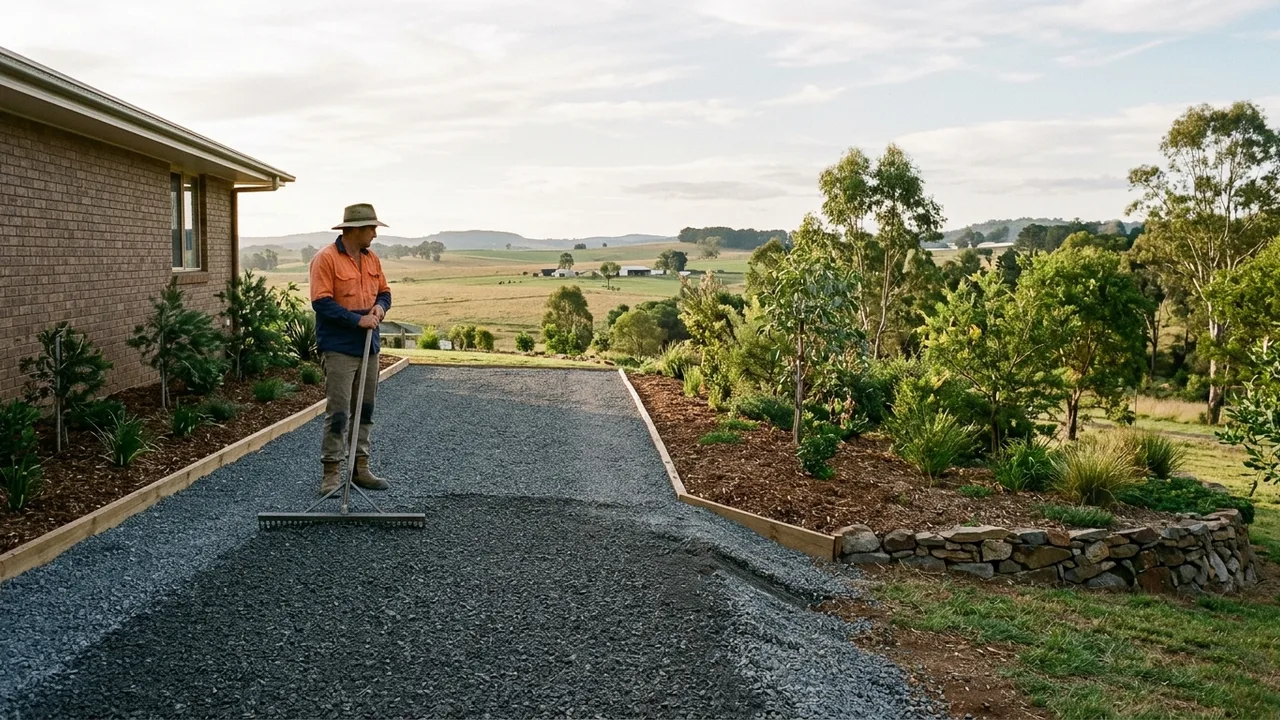
Rural Earthworks in Pittsworth
A rock wall or terrace may make your Pittsworth property easier to use. The right approach starts with the slope, the ground and where water needs to go.
A rock wall or terrace can create more usable ground, but the slope and the load above it determine what will suit your property. An earthworks contractor assesses the ground before recommending excavation, a retaining structure or a gentler reshaping of the slope. Drainage belongs in that decision from the start. A flat area for a shed, a garden terrace and an access track each need a different approach.
Services in Pittsworth
- Drainage and trenching Drainage excavation and service trenches need a workable water path and safe digging access.
- Dam construction Excavate a farm dam with the basin, embankment and overflow suited to your ground and water needs.
- Land clearing and vegetation management Land clearing opens rural ground through targeted tree removal, mulching or slashing to suit its planned use.
- Site cuts and house pads House site excavation and levelling bring the building area, finished levels and access into focus.
- Shed and tank pads Prepare a level shed or tank footprint with supporting ground and space for delivery vehicles.
- Driveways and access roads Rural driveway work shapes the track, supports vehicle access and accounts for water crossing the ground.
Pittsworth: rock walls and terraces for sloping ground
A terrace divides a slope into flatter areas, while a retaining wall holds soil where the ground changes level. They can work together, but a wall is not always needed. Where space allows, reshaping the bank into a gentler slope may suit the way you use the land.
The intended use matters as much as the finished shape. Ground beside a driveway carries different loads from a planted garden bed. A future shed also changes the discussion because the building and its foundations need to be considered alongside the excavation.
A contractor looks at the height difference and the room available above and below the proposed work. That assessment helps establish how much soil needs moving and whether a rock wall is a suitable option. The useful result is ground that serves your plans, with enough room for access and drainage.
Water needs a path through the finished work
A terrace needs a planned path for water so the new level area does not become a place where runoff collects. Cutting into a slope can intercept water that previously travelled across the ground. Filling a low area can also change where it goes.
The earthworks specialist considers water arriving from uphill, runoff from the new surface and drainage behind any retaining structure. Water held behind a wall adds pressure, so the wall and its drainage need to be considered together.
For a driveway that washes out, adding material alone may leave the underlying problem unresolved. The contractor assesses how water reaches the damaged section and where it can leave the access route. The proposed earthworks should connect the terrace, driveway and surrounding ground without treating each patch as a separate problem.
Machinery access shapes the excavation
The route onto your property affects which machinery can reach the slope and how the work can be carried out. A wide gate is only part of that assessment. Turning room and the ground between the entrance and work area also matter.
Rock wall work needs space to place materials as well as room to excavate. A narrow area beside a home may call for a different approach from an open rural block. Existing fences or nearby structures can also limit where machinery operates.
Excavated soil needs an agreed destination. Suitable material may have a use elsewhere on the property, while material that cannot be reused needs removal. Including that movement in the scope makes the difference between a finished terrace and a flat patch surrounded by stockpiles.
Rural earthworks across the Darling Downs
A smaller acreage terrace can need the same attention to water and access as a larger rural excavation. The scale of the property does not decide how involved the job will be. A confined slope beside a house can take more planning than open ground.
Rural earthworks across the Darling Downs and nearby areas, including Dalby, Cecil Plains and Maclagan, can involve connected work. A level shed area may need an approach track. Clearing may make room for machinery, while drainage work may be needed around the finished pad.
The quote should state the excavation and ground shaping included, how materials will be handled and what drainage work forms part of the job. Any retaining structure or building work should have a distinct scope so you can see what is covered beyond the digging.
How the local ground and property layout affect your plans
Pittsworth sits on elevated basalt country, with alluvial plains stretching below it to the west. That setting makes the position of your block relevant to slope work. An upland terrace and an access route on lower ground need an assessment of their own levels and water movement.
Near town, timber Queenslanders and smaller brick homes form part of the housing mix. Larger rural and lifestyle blocks sit towards the outskirts. Around an established home, space beside the building may shape the excavation. On a larger block, the distance between the entrance, material storage and work area also affects the job.
The surrounding district has productive agricultural soils, and cotton is a significant crop. Where earthworks meet cultivated ground, keeping useful topsoil separate from deeper excavated material can help preserve its value for later use.
The Pittsworth Pioneer Historical Village, Lions Park and Pittsworth Library are local landmarks. For a property near these places or farther into the rural outskirts, the details that guide slope work remain specific to the block: its fall, available working room and intended use.
Frequently Asked Questions
Do I need council approval for a retaining wall on my rural Pittsworth property?
Need usable ground, better access or drainage? Request an earthworks quote.
Describe the work you need and your property's location.