
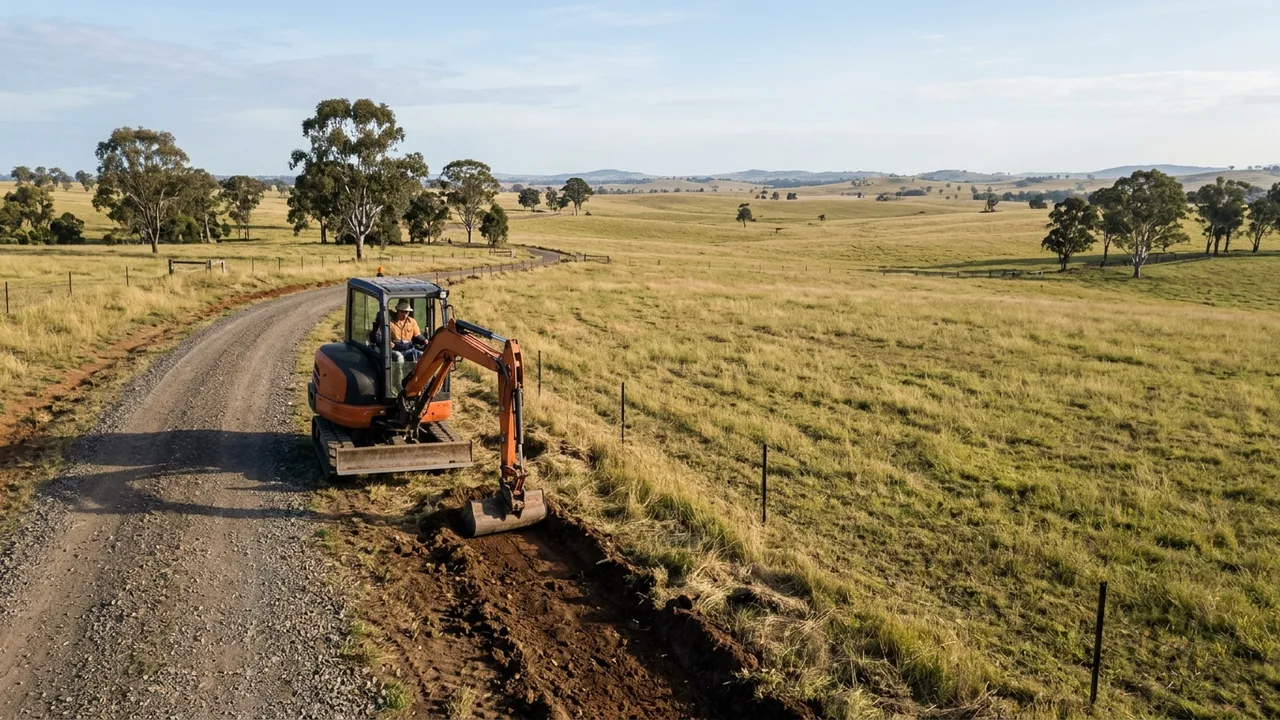
Rural Earthworks in Highfields
Clearing near water in Highfields needs more thought than removing overgrowth. An earthworks contractor can assess the ground and plan access alongside drainage.
Clearing near water needs a scope that considers the bank, the vegetation staying in place and where disturbed soil could wash. Removing growth alone may leave soft access or exposed ground. An independent earthworks contractor assesses those conditions on your property before setting out the clearing and any connected excavation.
Services in Highfields
- Site cuts and house pads House site excavation and levelling bring the building area, finished levels and access into focus.
- Shed and tank pads Prepare a level shed or tank footprint with supporting ground and space for delivery vehicles.
- Driveways and access roads Rural driveway work shapes the track, supports vehicle access and accounts for water crossing the ground.
- Drainage and trenching Drainage excavation and service trenches need a workable water path and safe digging access.
- Dam construction Excavate a farm dam with the basin, embankment and overflow suited to your ground and water needs.
- Land clearing and vegetation management Land clearing opens rural ground through targeted tree removal, mulching or slashing to suit its planned use.
Highfields: rural earthworks near water
The useful result is accessible ground without creating another water problem. That may involve selective clearing rather than stripping the whole area. Vegetation beside a bank can help hold soil, so the contractor considers what can remain while opening the space you need.
The scope should distinguish cutting growth from removing stumps and roots. Pulling roots out disturbs more soil and can affect the shape of a bank. Where you want a track or working area, the contractor assesses how much excavation that use needs.
Machinery also needs somewhere suitable to work. A dry approach can lead into soft ground beside water, and a narrow bank may offer little room to turn. The working route and the place for removed material belong in the scope alongside the clearing boundary.
Access that works beyond the cleared patch
A cleared route needs a suitable surface and a path for water if it is to provide useful property access. If your driveway washes out, replacing lost material may leave the cause untouched. The contractor looks at the ground slope and where runoff reaches the track before recommending excavation or reshaping.
Water pooling across an entrance can call for different work from a track worn down by tyres. The first needs attention to water movement. The second may need unsuitable material removed and a better base built up. An assessment on the property establishes which work fits the problem.
Machinery access affects the job too. Gate openings and turning space determine how equipment reaches the work area. Existing fences or garden edges may limit that route, even where the clearing itself covers a small patch.
House pads, shed pads and water storage
A house or shed pad needs ground shaped for the planned building, with runoff considered around its edges. A pad is the prepared area beneath the proposed structure. Its position and level need to suit the building plans, rather than just making an uneven patch look flat.
The earthworks contractor assesses the cut and fill involved. Cut means excavating higher ground, while fill builds up a lower area. How that material is placed and compacted matters to the ground supporting the planned work.
For additional water storage, excavation needs to suit the proposed storage location and the ground beneath it. Clearing access to that area can be part of the same earthworks scope. Building approval is decided by a building certifier, with planning matters handled by council. Any regulated building or installation work needs a distinct scope from the digging.
What the earthworks quote covers
A useful quote identifies the area being worked and the finished result, including how excavated material and removed vegetation will be handled. For clearing beside water, it should make the retained vegetation and the limits of ground disturbance clear.
Smaller acreage work still needs a defined scope. Opening an overgrown entrance may involve little excavation, while making that entrance usable could also require ground shaping. The quote should state which of those tasks are included.
Ground conditions affect the equipment and excavation involved. The contractor assesses the material to be moved and the access available when pricing the work. Where clearing connects with a driveway or pad, the quote should show how those tasks fit together and what surface will remain.
Ground and access around Highfields
Highfields occupies part of the Great Dividing Range, to the north of Toowoomba. For earthworks, the slope on your own block shapes the drainage plan. A contractor needs to assess where water enters the work area and where it can leave after the ground is reshaped.
Its history as farming and dairying country now sits alongside substantial residential development. Broad garden blocks and former rural residential holdings share the suburb with newer estate homes. That mix makes the available working space a property-specific question. An acreage clearing job and excavation beside an established garden need different machinery routes.
The New England Highway connects Highfields with Toowoomba, about 12 kilometres to the south. Machinery access also depends on the route through your gate and across your land. Around Peacehaven Botanic Park, Highfields Library and Highfields Sports and Recreation Centre, the individual property's entrance and working room determine the access plan.
Queensland requires an operator to obtain an environmental authority before carrying out an environmentally relevant activity. For proposed clearing near water, the scope needs to establish whether the planned activity falls within that process before work begins.
Frequently Asked Questions
What rules apply to clearing beside water on a Highfields property?
Need usable ground, better access or drainage? Request an earthworks quote.
Describe the work you need and your property's location.