
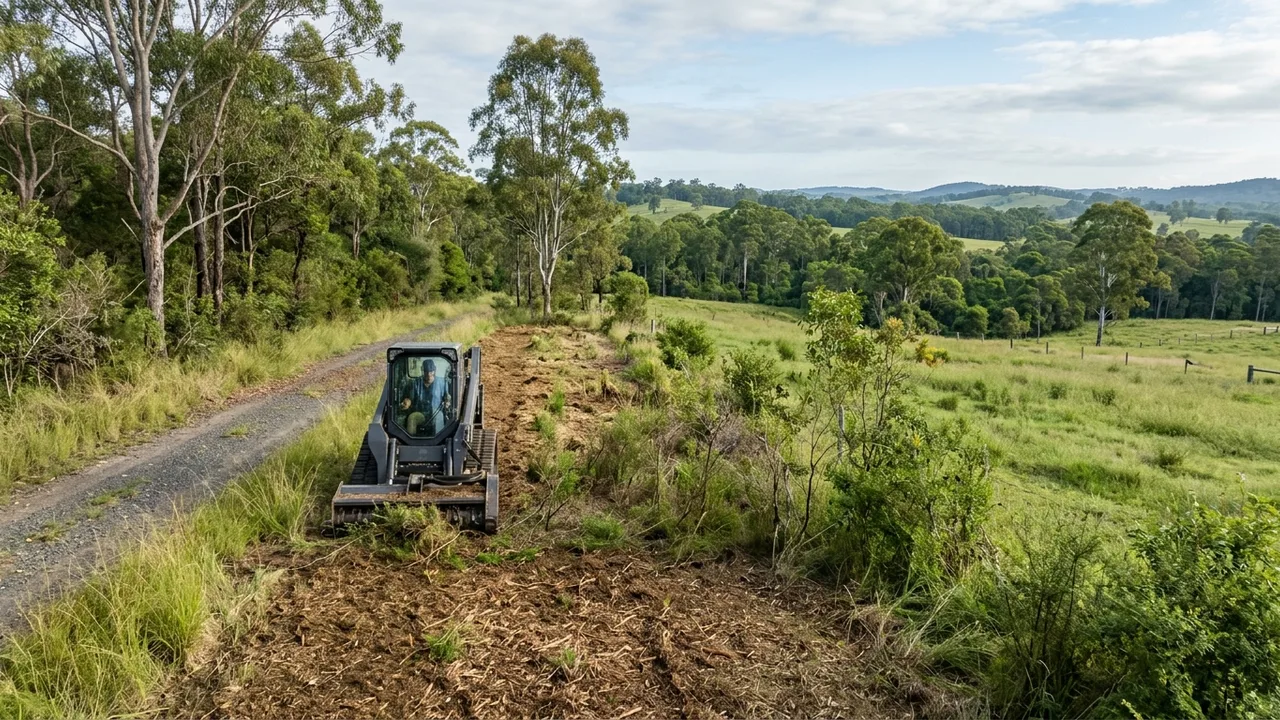
Land Clearing in Darling Downs
Land clearing in Darling Downs can open overgrown ground for access or your next property project. The right approach starts with what needs to stay.
Overgrown ground can be cleared for access, building preparation or agricultural use, with the method chosen around your intended result. Grass across an acreage needs different treatment from trees and stumps where a shed will stand. A qualified earthworks contractor assesses the vegetation, machinery access and ground conditions before setting the clearing footprint. Work can cover Darling Downs QLD and nearby areas including Dalby, Cecil Plains and Maclagan.
Land clearing in Darling Downs: choosing how much to remove
The best clearing footprint is the area your intended use needs. For a shed, that may include space around the building area and an access route. For agricultural work, it depends on how the cleared ground will be used and maintained.
Removing every tree is not the starting point. Retained vegetation can sit outside the working area, while selected brush or obstacles are removed from the ground you need. A contractor assesses the practical limits on site.
Clearing also suits property improvements where overgrowth blocks access to an area intended for landscaping. The useful distinction is between cutting growth back and removing what prevents the next job from starting.
Rural earthworks after slashing or mulching
Slashing can make grassy ground easier to access and maintain, but it leaves roots and larger obstacles in place. It suits a different result from excavation where stumps or rocks need to come out.
Mulching reduces vegetation to smaller pieces that may remain on the ground. That can suit some property uses, while a future building area may need material removed from the working footprint. The intended finish determines which approach makes sense.
Repeated cutting may suit land that will stay open and need ongoing care. Excavation becomes relevant when obstacles prevent access or interfere with planned ground preparation. Treating these as separate choices avoids paying for a finish that does not support your next step.
Rural earthworks costs and the finished ground
The amount and type of vegetation shape the cost, along with access and the treatment of cleared material. Dense brush takes different work from open grass. Large stumps involve excavation beyond cutting a tree down.
A useful quote covers the clearing boundary, stump treatment and handling of material. It also states the finish included, such as filling excavated holes or shaping disturbed ground. Connected access or drainage work needs its own place in that scope.
Job length depends on those same conditions. Tight working space and ground that cannot support machinery can affect the work sequence. A site assessment gives the contractor a basis for discussing duration without relying on acreage alone.
Water needs a path through cleared ground
Clearing needs to account for where water already travels and how the work could alter that path. Removing vegetation or leaving soil piled across a flow route can affect adjoining ground.
The contractor considers surface falls and the position of access tracks before disturbing the area. Keeping machinery within the necessary footprint can reduce disturbance. If drainage earthworks are needed alongside clearing, their extent belongs in the agreed job.
A clearing quote for your property
Request an earthworks quote with your suburb, what is overgrown and what you want to use the ground for. Mentioning narrow access or water pooling gives a clearer picture of the clearing job.
How it works
-
Set the clearing boundary
The contractor walks through the intended work area and identifies vegetation to retain. The proposed access route matters too, because machinery needs room to enter and work without crossing ground unnecessarily.
-
Choose machinery for the ground
An excavator may suit stump excavation or handling larger obstacles. Slashing equipment suits different work. Ground firmness, slope and working space guide the choice, rather than choosing machinery from the property size alone.
-
Clear towards the intended finish
The work follows the agreed footprint and treatment of vegetation. Stump holes may need filling and shaping, while areas intended for later construction need a finish that supports the next stage.
-
Leave a defined handover point
The agreed finish establishes where clearing ends and further earthworks begin. Ground cleared of vegetation can still need levelling or other preparation before it serves as a driveway, building area or landscaped space.
Scope in detail
- Clearing the working area A defined boundary keeps the work focused on the ground you need. Trees and vegetation outside that area can remain part of the property.
- Removing obstacles below the surface Stumps and roots can interfere with later excavation. Their removal needs to suit the planned use, especially where building preparation will follow.
- Considering water movement Clearing exposes ground to rain and machinery traffic. The contractor considers how water crosses the area and where disturbed soil could move.
- Managing cleared material Cut vegetation, mulch and excavated stumps need an agreed destination. The quote should state what stays on the property and what removal includes.
Land clearing and vegetation management options
- Tree, brush and stump removal Targeted removal can open a building area or restore an access route. Rock removal can also form part of the work where obstacles affect the intended use.
- Vegetation mulching Mulching breaks vegetation into smaller material. It can suit areas where that material can remain, but it does not provide the same result as removing stumps.
- Acreage slashing and commercial mowing Slashing or mowing can reduce grass and light growth across open ground. The choice depends on the vegetation, surface conditions and finish needed.
Land clearing and vegetation management across Darling Downs
Frequently Asked Questions
Does land clearing in Darling Downs need council or environmental approval?
Can rural land clearing suit a farm or smaller acreage?
Can land clearing include removing trees and stumps?
Need usable ground, better access or drainage? Request an earthworks quote.
Describe the work you need and your property's location.