
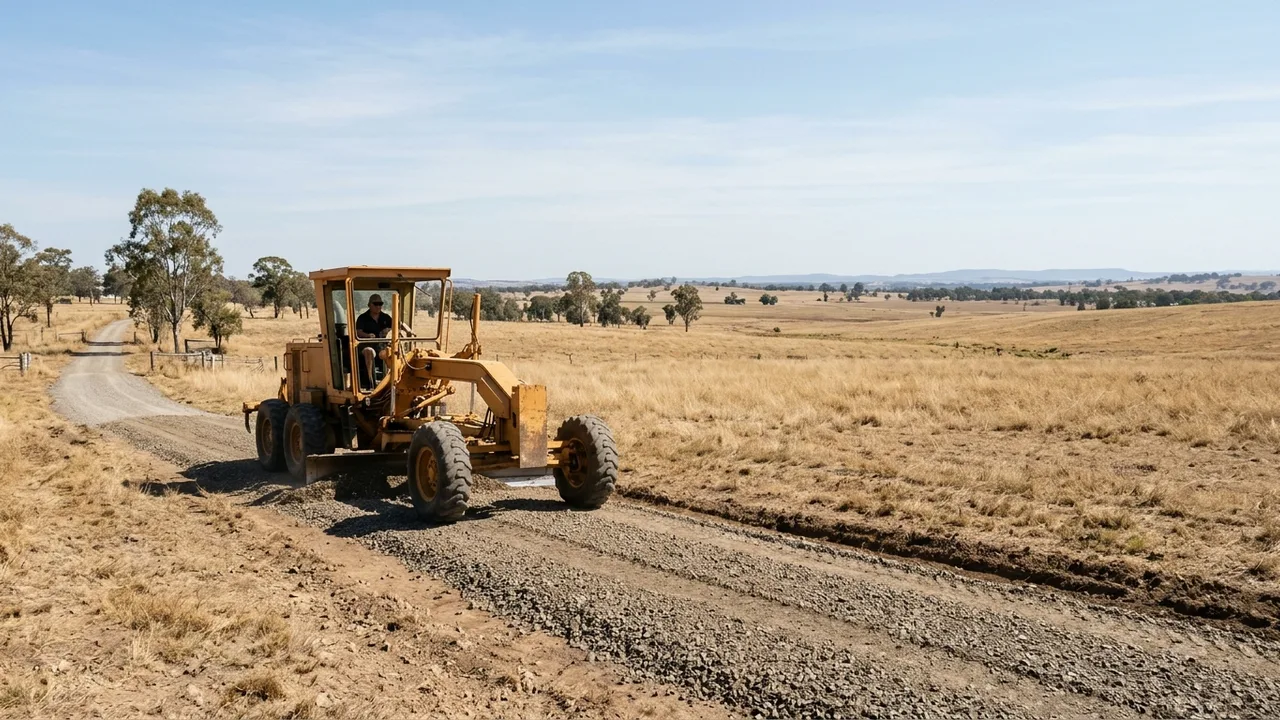
Driveway Earthworks in Darling Downs
Water cutting through your track needs more than another load of gravel. Driveway earthworks in Darling Downs starts with the ground shape and where runoff goes.
A rural driveway can often be reshaped to shed water instead of letting it cut along the wheel tracks. An earthworks contractor assesses the existing surface, ground fall and water crossings before deciding if regrading is enough or deeper excavation is needed. For a new driveway, the work starts with a route suited to your vehicles and a firm foundation beneath the finished surface. This work suits residential blocks, acreage and rural properties across Darling Downs QLD and nearby suburbs, including Dalby, Cecil Plains and Maclagan.
Driveway earthworks in Darling Downs: stopping water from cutting the track
Reshaping the driveway may help stop washouts when the work also addresses the water causing them. Gravel placed into an eroded rut can wash away again if runoff still follows the same path.
The contractor looks beyond the damaged patch. Water may arrive from adjoining ground, collect along the edge or run down wheel tracks. The assessment establishes which paths are contributing to erosion before a repair is chosen.
A raised centre or a fall across the driveway can direct water off its surface. The right shape depends on the surrounding land and where that water can go. Moving runoff off the track without considering its outlet can leave another access area wet or eroded.
Rural earthworks for gravel repairs or a new driveway
Regrading suits a driveway whose underlying foundation remains sound. It reshapes the existing material, removes uneven areas and restores useful surface fall. Adding road base may be appropriate where gravel has been lost.
Soft sections or repeated deep rutting may need excavation and rebuilding. Covering weak ground with fresh gravel alone may leave the same movement beneath the surface. The contractor assesses the foundation before choosing how much of the driveway needs rebuilding.
For access from cleared ground, excavation and construction can establish the track through to a gravel finish. Asphalt, bitumen and concrete involve different finishing work. If one of those surfaces is planned, the quote needs to identify the earthworks and the separate surfacing work so the foundation suits the intended finish.
Rural earthworks shaped around your vehicles
The driveway needs to suit the vehicles that actually use your property. A route used by trucks needs its foundation and turning space considered alongside the surface finish. A smooth appearance alone does not show how the access will carry those loads.
Entrances, bends and stopping areas deserve attention because vehicles turn or brake there. Drainage crossings also need to fit the access rather than create a difficult change in level.
Cost depends on the track length and condition, machinery access and how much material needs moving. Imported road base and drainage construction also affect the scope. A useful quote separates surface reshaping from rebuilding so you can see what work your money covers.
Drainage crossings and approval considerations
Culverts and swales may be included where water needs to cross or run beside the driveway. A culvert carries flow beneath the track. A swale is a shallow channel shaped into the ground to guide surface water.
Their position needs to account for incoming water and the outlet beyond the driveway. Within the Western Downs Regional Council area, filling or excavation may require development approval. Council decides planning matters, so that decision belongs alongside the proposed earthworks scope.
Tell the contractor where access is failing
Request an Earthworks Quote with your suburb, the approximate track length and where water cuts through or pools. Include the vehicles using the driveway and the surface you want, so the work can be considered around your access needs.
How it works
-
Assess the track and vehicle use
The contractor looks at the damaged areas, the route water takes and the vehicles needing access. Machinery entry also matters, especially where gates or existing ground conditions restrict movement.
-
Set the excavation and drainage scope
The proposed work identifies where material needs removing, where the track needs rebuilding and how runoff will leave the surface. A quote covers the agreed excavation, material placement, grading and drainage work.
-
Build and shape the access
Excavation establishes the foundation before suitable material is placed and compacted. Graders can shape longer access roads, while other earthmoving machinery may suit confined entrances or shorter driveway sections.
-
Finish the surface and water paths
The finished track needs a usable shape through bends and entrances, with drainage connected to an appropriate outlet. Job duration depends on the length, excavation needed and extent of drainage construction.
Scope in detail
- Driveway excavation Removing unsuitable ground gives the driveway a firmer starting point. The depth and extent depend on what the contractor finds beneath the proposed track.
- Road base and grading Road base forms a compacted layer that supports vehicle traffic. Grading shapes that material so the track carries vehicles and sheds surface water.
- Entrances and access tracks A rural entrance needs room for the vehicles using it. Its alignment and connection to the property track affect turning, access and drainage.
- Water crossings Water approaching from higher ground needs a considered path across or beside the driveway. Treating that flow can help reduce further erosion of the access surface.
Driveways and access roads options
- Existing driveway regrading Reshaping a worn gravel driveway can address ruts and restore surface fall. The contractor assesses whether the remaining material can be reused or needs additional road base.
- New rural access construction A new access track involves setting the route, excavating unsuitable material and building up a compacted foundation. Vehicle use and drainage guide the shape of the work.
- Driveway drainage excavation Excavation beside or across the access can form a path for runoff. Swales or culverts may form part of the work where the ground and water flow suit them.
Driveways and access roads across Darling Downs
Frequently Asked Questions
Why does my gravel driveway keep washing out?
Does a rural gravel driveway need drainage?
Can driveway earthworks include a culvert or swale?
Can an existing rural driveway be regraded?
Need usable ground, better access or drainage? Request an earthworks quote.
Describe the work you need and your property's location.