
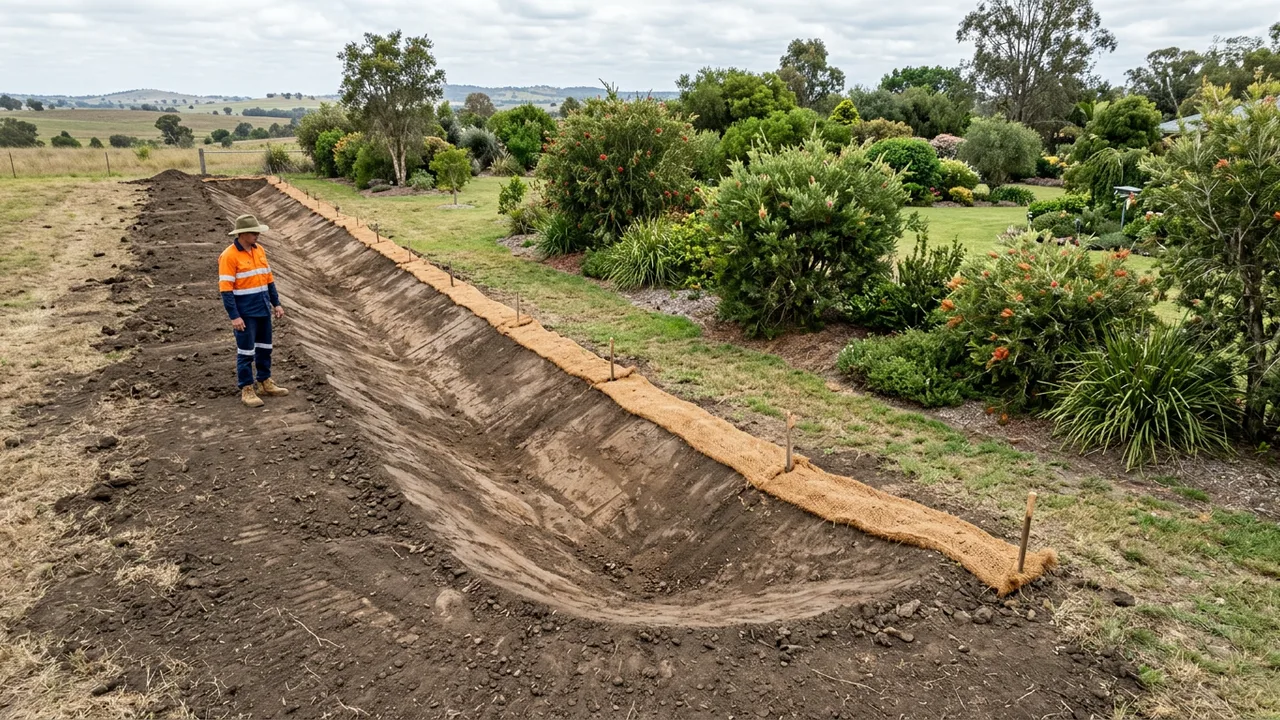
Drainage Excavation in the Darling Downs
Drainage and trenching
Water pooling across your access or around a planned shed can need more than a trench. Drainage excavation in the Darling Downs starts with finding where water can go.
Excavation can help with pooling water when reshaping the ground or creating a drainage path suits the property. The earthworks contractor needs to assess the ground levels and a suitable outlet before deciding where to dig. A deeper trench alone may leave water sitting in a different place. For rural properties across the Darling Downs QLD and nearby areas including Dalby, Cecil Plains and Maclagan, the useful starting point is how water moves through the land you need to use.
Drainage excavation in the Darling Downs: where pooling water can go
A useful drainage solution needs somewhere suitable for the water to go. Cutting through a wet patch without understanding the outlet can shift pooling towards another part of your property.
Surface reshaping may suit runoff that collects in a shallow depression. A trench may be needed where the drainage plan includes a buried pipe. These options solve different problems, so the contractor assesses the path of the water before choosing the excavation method.
Water near a house or shed also needs attention to the surrounding ground levels. Digging close to a structure calls for care around its foundations and existing services.
Rural earthworks for drainage and sloping ground
Reshaping land can improve water movement, but flattening every slope is not the aim. A useful fall allows water to leave the area without concentrating it into a flow that scours the ground.
On an access track, runoff may need a path beside or across the route. Beside a building pad, the surrounding levels need to work with the planned building work. The contractor assesses these connections together.
Ground conditions affect how the excavation proceeds. Soft ground can limit machinery access, while hard material can make digging more involved. Your property's conditions are a better guide to the work than assumptions based on the wider region.
What rural earthworks trenching includes
Trenching covers the excavation needed for a planned service, with the finish agreed as part of the job. It does not automatically include supplying or connecting pipes.
A clear quote identifies the trench route, the handling of excavated soil and the backfilling work. Where material needs to leave the property, disposal belongs in that scope too.
Buried services matter even on open acreage. Their location needs to be established before excavation begins. The contractor also needs enough working room for machinery and a place for excavated material that keeps it clear of the trench.
What affects the cost and duration
Trench length, digging depth and machinery access drive the amount of work involved. The ground itself matters too, particularly where excavation encounters hard material or needs support in soft conditions.
A short trench with difficult access can involve more work than a longer run across accessible ground. Removing spoil and restoring a driveway also add work beyond the digging.
Duration depends on that scope and the sequence of any installation. If an installer needs access to the open trench, the excavation programme needs to allow for that stage. A property assessment gives the quote a practical basis.
Who handles drainage installation and approvals
Regulated plumbing and drainage work needs an appropriately licensed specialist. In Queensland, the QBCC oversees licensing for building and construction work, including plumbing and drainage. An earthworks quote should distinguish excavation from that installation work.
Building approval decisions sit with a building certifier, while council handles planning matters. The contractor can provide information about the proposed excavation to support those decisions.
Relevant insurance and the proposed excavation method also matter when choosing a contractor. The agreed work should account for trench safety, nearby structures and the machinery needed to reach the digging area.
Start with the ground you need to use
A useful drainage quote connects the wet area with the access or building work it affects. Include where water pools, how the ground slopes and what stands nearby in your message. Request an Earthworks Quote for the excavation and finish your property needs.
How it works
-
Assess the flow and access
The contractor looks at where water collects, how the land falls and where machinery can reach. Underground services and the proposed discharge point shape the excavation approach.
-
Set the digging and installation scope
The quote identifies the excavation work and its boundaries. Where a service will be installed, the installer’s needs guide the trench work and the point at which backfilling can proceed.
-
Excavate and finish the ground
The contractor carries out the agreed digging, with installation work coordinated before the trench is closed. The agreed finish covers how excavated material is handled and how the disturbed surface is reinstated.
Scope in detail
- Pooling water and ground levels Low ground can hold water across a driveway or beside a building pad. Assessing the surrounding slope helps establish whether reshaping the surface could improve the flow.
- Trenches for planned services Excavation creates space for a planned service, but the route and depth need to suit the installation. Existing buried services also affect where machinery can safely dig.
- Drainage alongside access work A repaired access track can still suffer if runoff crosses it unchecked. Considering water movement alongside the surface work helps address the reason the ground is washing away.
- Backfilling and the finished surface An open trench is only part of the job. Backfilling, compaction and surface reinstatement need a defined place in the scope so the finish suits the way you use the ground.
Drainage and trenching options
- Surface drainage excavation Ground reshaping and open drainage paths can guide runoff away from areas that need access. Their suitability depends on the fall of the land and where the water will discharge.
- Service trench excavation Trenches provide excavation space for planned underground services. Digging and backfilling need coordination with the specialist responsible for installing and inspecting the service.
Drainage and trenching across Darling Downs
Frequently Asked Questions
Do underground services need locating before drainage trenching?
Can earthworks improve drainage on sloping Darling Downs land?
Can drainage excavation help where poor drainage is causing erosion?
Need usable ground, better access or drainage? Request an earthworks quote.
Describe the work you need and your property's location.