
Rural Earthworks in Crows Nest
Excavation and spoil removal can form part of your Crows Nest earthworks project. The scope needs to cover the ground you want shaped and where the excavated material will go.
A house pad, shed site or access track can include both excavation and removal of unwanted material. Spoil means the soil or rock dug out during the work. Some may suit reuse elsewhere on your property, while material with no agreed use needs removal. An independent earthworks contractor assesses the ground, machinery access and drainage before setting out the work. The quote should state what stays, what leaves and how the finished area will be shaped.
Services in Crows Nest
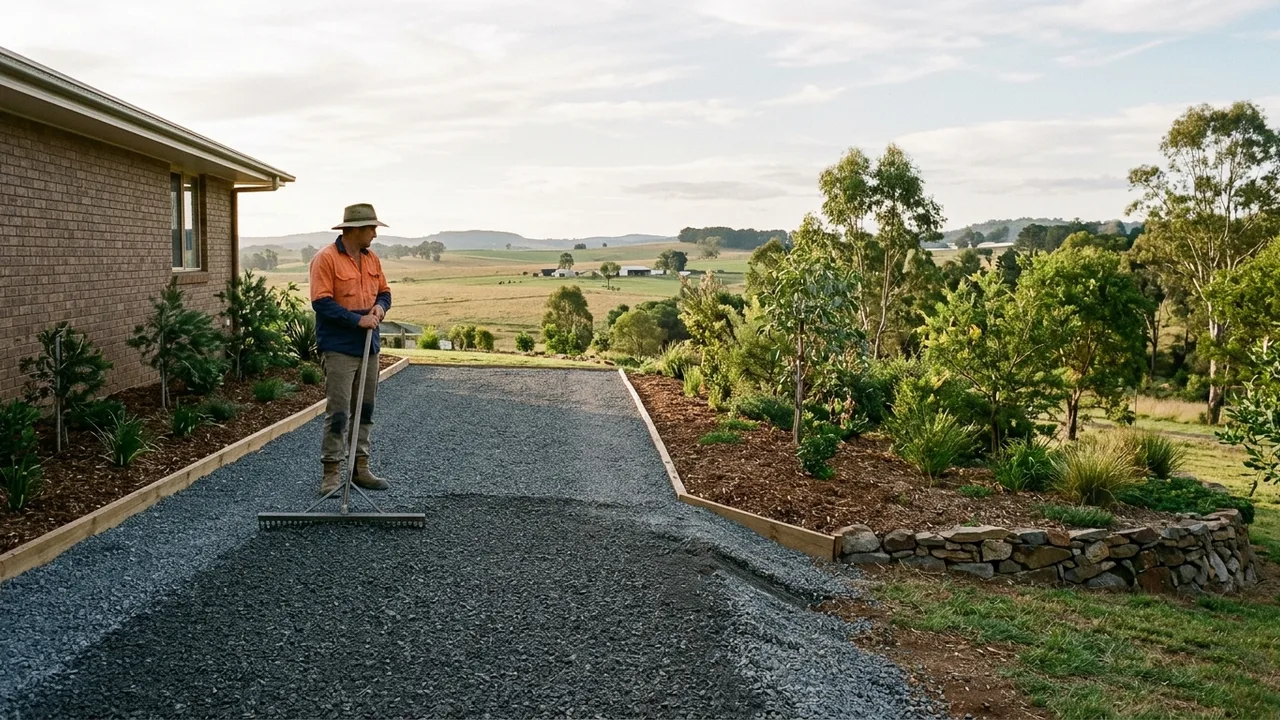
- Driveways and access roads Rural driveway work shapes the track, supports vehicle access and accounts for water crossing the ground.
- Drainage and trenching Drainage excavation and service trenches need a workable water path and safe digging access.
- Dam construction Excavate a farm dam with the basin, embankment and overflow suited to your ground and water needs.
- Land clearing and vegetation management Land clearing opens rural ground through targeted tree removal, mulching or slashing to suit its planned use.
- Site cuts and house pads House site excavation and levelling bring the building area, finished levels and access into focus.
- Shed and tank pads Prepare a level shed or tank footprint with supporting ground and space for delivery vehicles.
Crows Nest: rural earthworks and spoil removal
Excavation and spoil removal belong in the same scope when the digging will leave material you cannot use. A level area can involve cutting into higher ground, building up lower ground, or a combination of both. The contractor assesses which approach suits the site and the planned use.
Reuse can reduce the amount that needs carting away, but loose excavated soil is not automatically suitable beneath a building pad or driveway. Its condition and the way it is placed matter. The quote should identify the excavation area, any agreed reuse area and the material to be removed. This gives you a clear picture of the work beyond the digging.
A house or shed pad needs more than a flat surface
A useful pad needs ground suited to the planned building and a way for water to move around it. A patch that looks level can still hold water or sit below the surrounding land. The contractor considers the proposed height alongside the slope and the available outlet for runoff.
Cutting and filling means removing high ground and using suitable material to raise low ground. Fill may need compaction, which presses it into a firmer layer. Building plans and any relevant ground assessment guide that work. The quote should distinguish pad excavation and filling from foundations or building work, so the boundary between those jobs is clear.
Driveway repairs need to address moving water
A driveway that washes out may need changes to its shape and drainage as well as replacement material. Water running along wheel tracks can carry the surface away. An earthworks contractor looks at where runoff enters, how it crosses the access and where it can leave.
Reshaping may help shed water off the driving surface. Drainage work may also be needed where water collects beside or across the track. The right approach depends on the fall of the land and how you use the access. A quote can cover excavation, surface preparation and agreed drainage work together, with spoil removal identified where repairs create excess material.
Machinery access affects the excavation plan
Machinery needs a workable route to the digging area and room to handle the excavated material. A narrow gate or a tight turn can affect the equipment suited to the job. Ground that carries a car may also behave differently under earthmoving machinery or a loaded truck.
The contractor assesses the entry and the route through the property, including space for loading spoil. Fences, existing buildings and buried services also influence where digging can take place. Smaller acreage work still needs this planning. A limited excavation can become awkward when there is nowhere nearby to stockpile soil or turn a vehicle.
Drainage, clearing and water storage can share a scope
Connected earthworks are easier to plan when the finished use of the land is clear. Clearing overgrown ground may reveal the area needed for a pad or access track. Drainage shaping can then be considered alongside the excavation, rather than leaving water to collect against the new work.
For additional water storage, the excavation needs to suit the proposed storage method and the surrounding ground. The contractor assesses the ground's suitability for the proposed water storage. The scope should separate excavation from any installation work. Where building approval is relevant, a building certifier decides it, while council handles planning matters. Licensed specialists undertake any regulated work.
Hills, town blocks and acreage shape the job
Crows Nest's hills make the relationship between excavation and water movement especially relevant to a proposed pad or access track. The locality lies in the dividing range at the eastern side of the Darling Downs. A flatter working area may therefore involve cutting into a slope, with careful thought about where runoff goes.
Property settings range from streets within town to acreage and farmland beyond it. A town block may leave little room for spoil storage, while an acreage project may involve a longer machinery route. The actual entry and working area determine the approach.
North of Toowoomba, the town sits along the New England Highway and serves nearby farming communities and rural homes. For work across Crows Nest 4355 and its surrounding rural land, property access matters more than the address alone. Crows Nest Falls, Lake Cressbrook and Lake Perseverance are local landmarks, but conditions at your excavation area still need assessment on the property.
Frequently Asked Questions
How much will earthworks at my Crows Nest property cost?
Need usable ground, better access or drainage? Request an earthworks quote.
Describe the work you need and your property's location.